
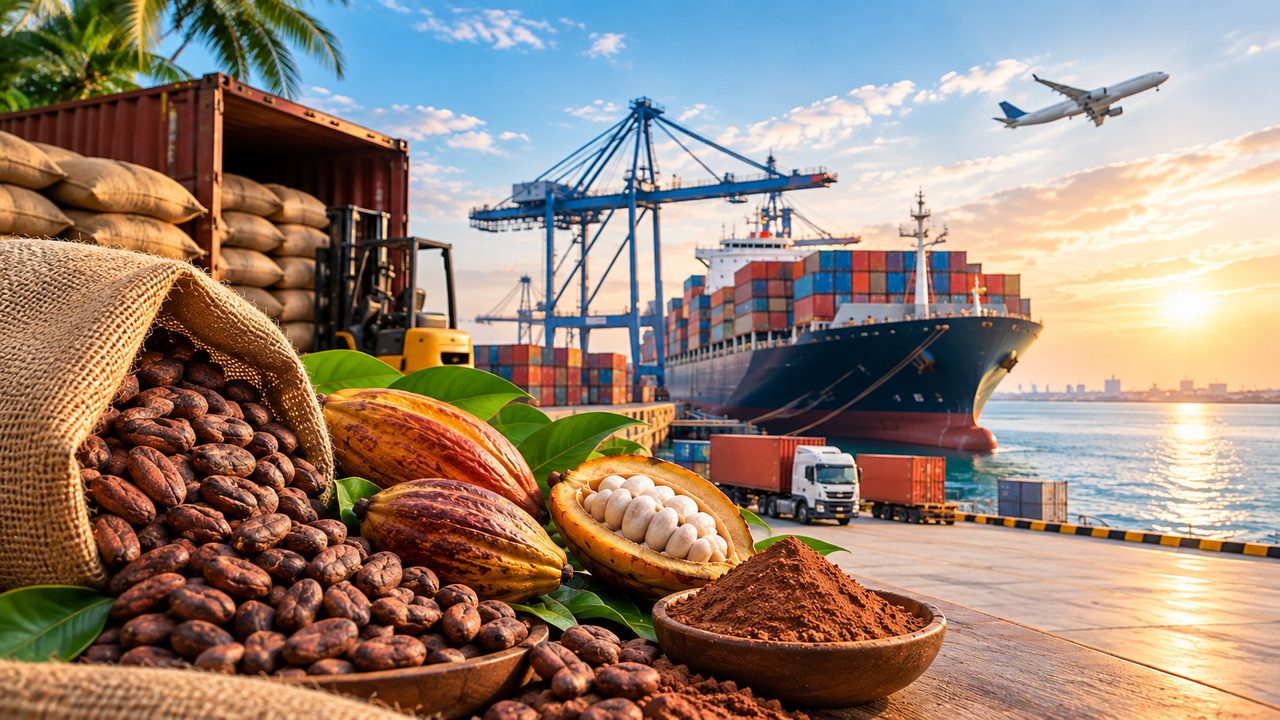
Importing Cocoa from Indonesia
From the Heart of Indonesian Farms to the World
Indonesian cocoa is one of the agricultural products receiving growing attention in international markets. Indonesia benefits from suitable agricultural conditions, extensive production areas, and accumulated experience in the cultivation, processing, and export of cocoa beans and cocoa-derived products.
With growing global demand for cocoa used in chocolate, confectionery, beverages, and food products, Indonesia has become an important destination for importers looking for diverse and reliable cocoa sources in Asia.
However, successful cocoa importing is not simply about finding the lowest price. It requires real knowledge of the source, product quality, the factory or farm, export requirements, inspection, packaging, shipping, documentation, and, most importantly, choosing the right local partner in Indonesia.
Why Import Cocoa from Indonesia?
Indonesia has a broad agricultural base and multiple cocoa-producing regions across several islands and agricultural areas. This provides importers with different options in terms of quality, quantities, and product specifications.
Some of the main cocoa products available from the Indonesian market include:
- Raw cocoa beans.
- Fermented and dried cocoa beans.
- Cocoa powder.
- Cocoa butter.
- Cocoa cake.
- Cocoa products for food manufacturing.
- Processed cocoa products manufactured according to the buyer's specific requirements.
The right product varies from one market to another. Therefore, defining the required specifications before starting the purchasing process is an essential step.
How to Start Importing Cocoa from Indonesia
The process begins by clearly defining the importer's requirements, including the type of cocoa, quantity, destination country, packaging method, required specifications, payment terms, and shipping arrangements.
The next step is finding the right supplier. This is where working with a company that is physically present in Indonesia becomes particularly valuable. A local partner can access suppliers, factories, and production areas and help verify information rather than relying solely on online offers, photographs, or quotations.
After selecting a supplier, samples can be requested when necessary, followed by quality inspection and verification against the required specifications. The buyer can then negotiate the price and commercial terms.
It is also important to determine the appropriate international trade terms, such as FOB, CFR, or CIF, depending on the nature of the transaction, port of loading, and final destination.
Quality Inspection and Verification Before Shipment
One of the most important stages in the cocoa trade is ensuring product quality before the container is loaded.
This may include verifying the agreed specifications, moisture content, bean condition, foreign matter, fermentation level, bean size, aroma, and any additional requirements specified by the buyer or the importing country.
An independent pre-shipment inspection can also be arranged when required, particularly for larger commercial transactions.
The objective is not only to verify product quality, but also to reduce commercial risks and ensure that the goods leaving Indonesia are consistent with what was agreed upon.
Methods of Exporting Cocoa from Indonesia
Cocoa is commonly exported by sea, especially when dealing with large quantities or containerized shipments.
Once the commercial agreement has been finalized, the process generally involves preparing and packaging the goods, transporting them to the port, completing the required export procedures and documentation, loading the container, and shipping the cargo to the destination port.
The choice of port and shipping method depends on the supplier's location, production facility, shipment volume, and final destination.
For African and Middle Eastern markets, available shipping routes can be evaluated to identify the most suitable option in terms of cost, transit time, and destination port requirements.
What Documents Are Required?
Documentation requirements vary depending on the product, importing country, and terms of the transaction.
Commercial export transactions may require documents such as a Commercial Invoice, Packing List, Bill of Lading, and Certificate of Origin, as well as health, quality, or inspection certificates when required by the product or destination country.
For this reason, the import requirements of the destination country should be reviewed before the shipment is executed, rather than after the goods arrive at the port.
Why Do You Need a Partner in Indonesia?
One of the biggest challenges facing international buyers is identifying a genuine and suitable supplier among dozens or even hundreds of commercial offers.
A price may look attractive on paper, but the real difference becomes clear when visiting the factory, inspecting the product, reviewing production capacity, confirming export readiness, and verifying quantities and specifications.
Having a commercial partner on the ground in Indonesia can save significant time and help reduce the risks associated with dealing with an unsuitable supplier.
Prime Gate — Your Preferred Destination for Cocoa Exports from Indonesia
This is where Prime Gate serves as a commercial bridge between Indonesian suppliers and international buyers.
With our presence in Indonesia, we assist importers and traders in accessing product sources, communicating with suppliers, evaluating offers, following up on samples and specifications, and coordinating inspection, packaging, and shipping arrangements.
Our objective is not simply to provide a list of suppliers. We aim to help our clients understand the transaction from the initial sourcing stage through to export, with a focus on practical information and, wherever possible, on-the-ground verification.
Whether you are an importer in Africa, the Middle East, Asia, or another international market looking for a new source of cocoa, choosing the right local partner can make a significant difference to the overall trading process.
Your Professional Advisor in Indonesian Trade
International trade does not begin with a container. It begins with the right information.
Before you make a payment, sign an agreement, or place a large order, you need to know who the supplier is, where the product comes from, what its specifications are, whether the price is suitable for your market, what the shipping costs are, which documents are required, and how commercial risks can be reduced.
Prime Gate provides a commercial perspective from within the Indonesian market and helps transform your sourcing idea into a structured and informed trading process.
If you are looking for Indonesian cocoa for export to your market, do not base your purchasing decision on price alone.
Base it on source, quality, verification, and experience.
Prime Gate — Your preferred destination for exports from Indonesia and your professional advisor for accessing reliable sources and global markets.
Prime Gate
Connecting Global Markets to Nature’s Source